A Do-over for the Family Crew Neck and a new Circular Yoke beginning.

I had a oops. I didn’t guess correctly on my needle size to get the gauge I wanted for my Family Crew Neck. If I was a smart person I would have notes on the needle sizes I have used before for this yarn, but … no notes. So I guessed. The gauge isn’t even close to what I wanted. So my first beginning of this Family Crew Neck for my grandson is toast.

Say goodbye to this one, it’s way too big. The gauge is closer to 5 sts/1″ and I was looking for 6 – 6 1/2 sts /1″.

New start.

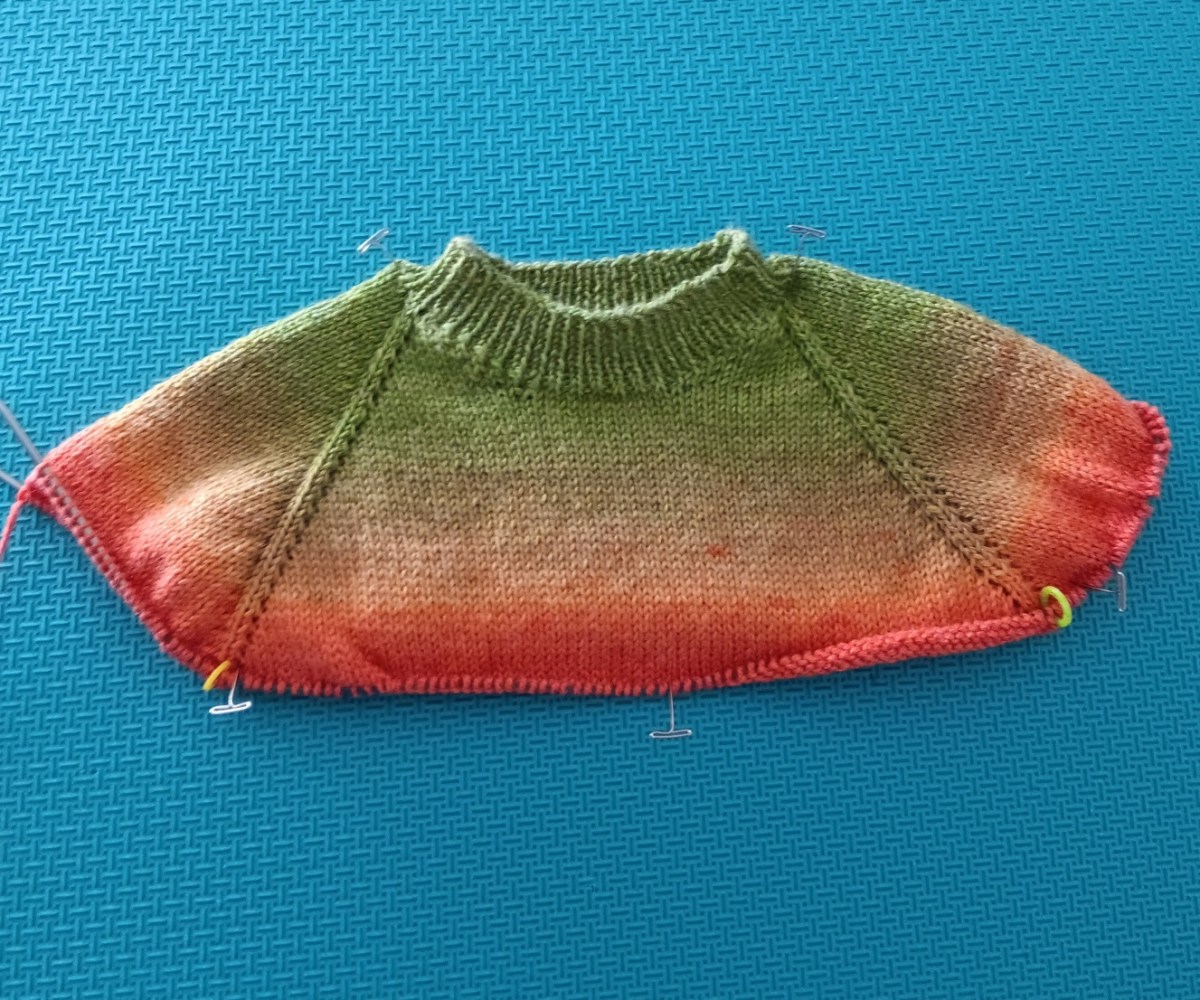
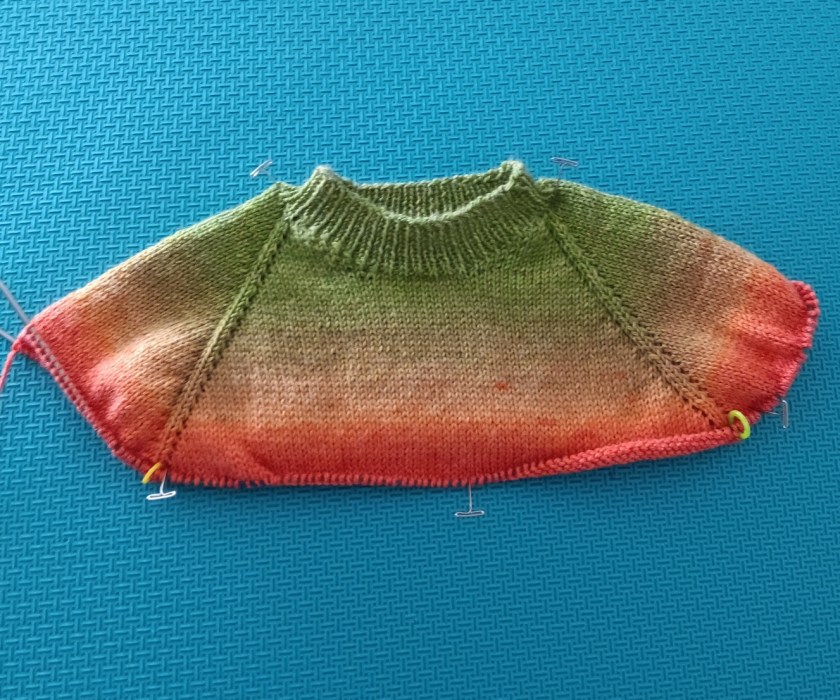
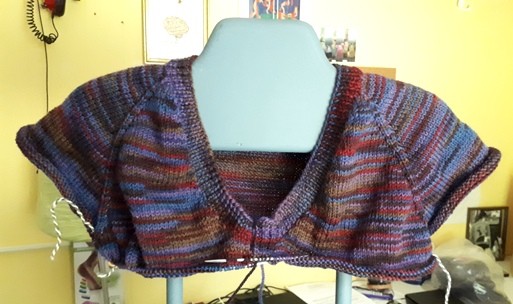
This is obviously working great. I got the gauge I wanted by going down a couple more needle sizes and voila, stripes are appearing like magic.

Here’s my weekly update.

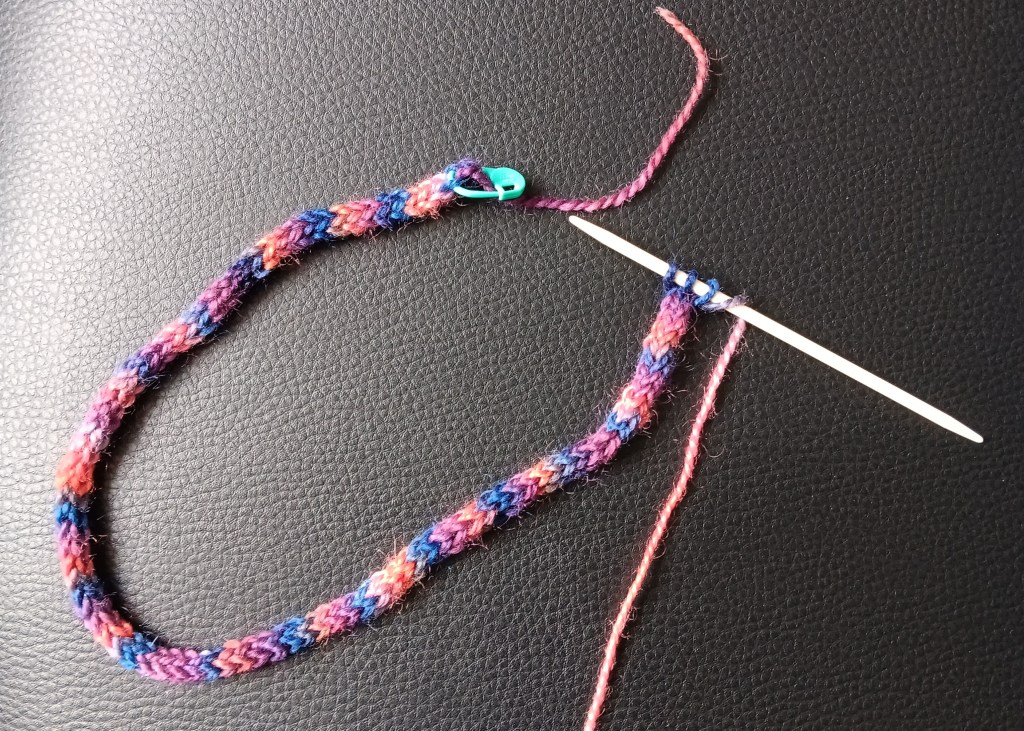
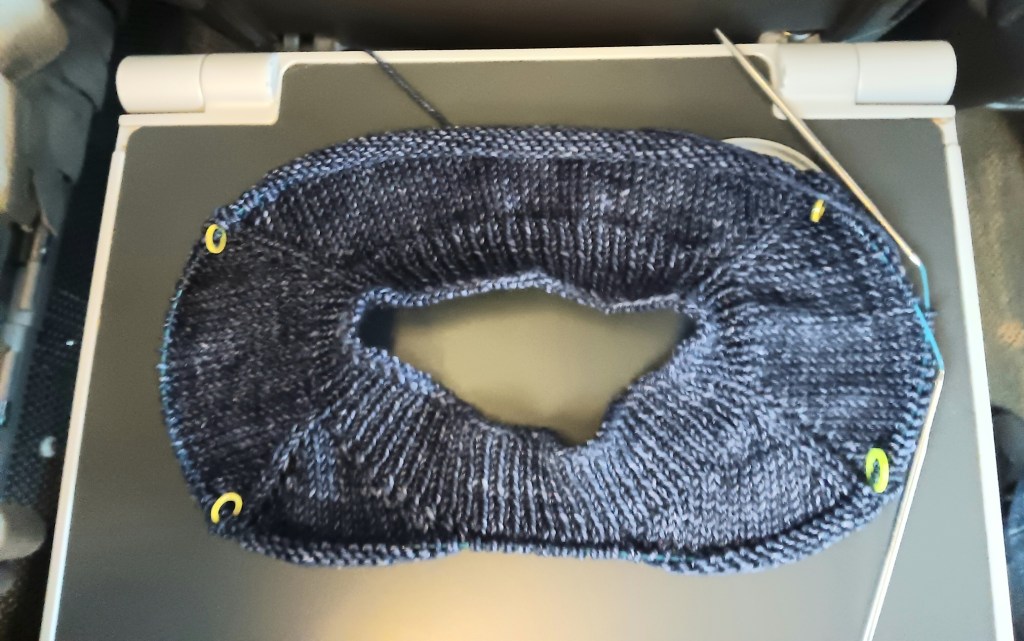
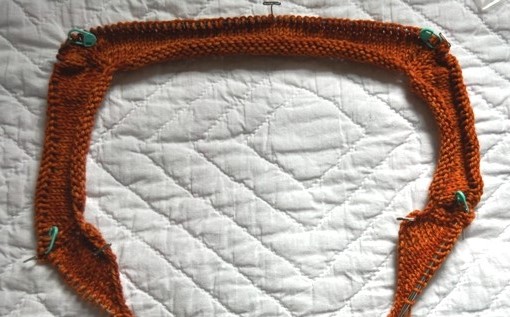
Because I can’t just knit just one sweater, I’m also knitting a Circular Yoke for myself. I started with an I-Cord 24″ long. I think this is a fairly good size for the neck opening. The I-cord idea came to me because I didn’t want to knit a swatch. I could knit the I-cord to the length I wanted, gauge doesn’t matter, it’s the length I needed. Don’t you sometimes just want to dive in? I do most of the time.

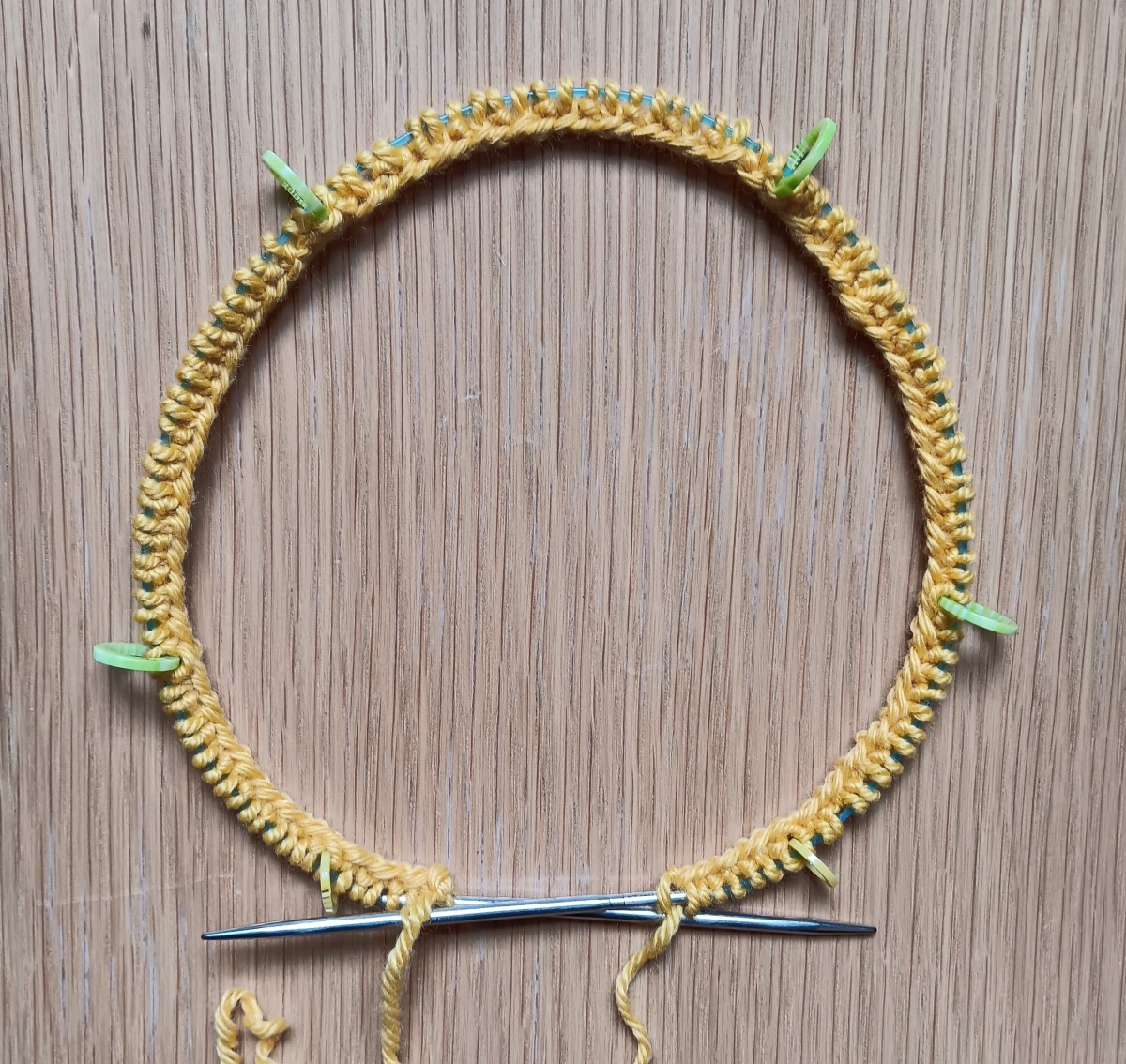
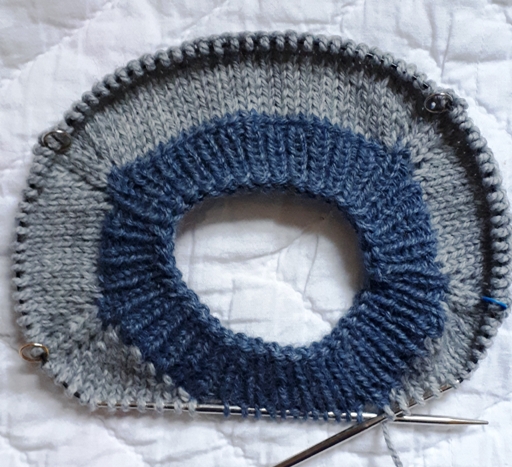
Once I picked up stitches around the I-cord I worked short rows using these Twin Stitches. Here’s a close up video of them.

The complete round where you have to close those last gaps from the back and forth short rows, is so much better with these Twin Stitches.

I can’t wait to get going on my 1-round stripes. I’m going to use the helical stripe method. Have you tried this?

Cheers, Deb

Any Gauge and Gauge-Free knitting patterns by Deb

deb.gemmell on instagram

Debgemmell435 on youtube

One more Family Crew Neck and some thoughts about Circular Yokes

It’s time to get started on my 2025 knitting. Have you started? I’m a little late to the party but I had to clear the decks, so to speak, and get those WIPs out of the way. Well, not out of the way exactly, but finished and delivered to the wearers, one of which is me.

Now I am starting on a request from my grandson for a rainbow sweater. It’s another Family Crew Neck, my 6th one. The modification for this one will be rainbow stripes. If you haven’t tried this pattern because of the math, I’ve done a video for the beginning cast on which shows my math for a 4 year old size. You can follow along over the coming weeks.

Also in the works is a top down circular yoke sweater. In the works at this point means I think about it at 3 a.m. There are so many ways to tackle a circular yoke. How could I work the yoke increases? Should I set up 8 or 12 markers and increase there every x number of rounds, as I work down the yoke? Maybe I could do a round with many, many increases and then work straight to the next round of many increases?

I have made 2 decisions so far. I am starting this circular yoke with an I-cord for the neck opening edge.

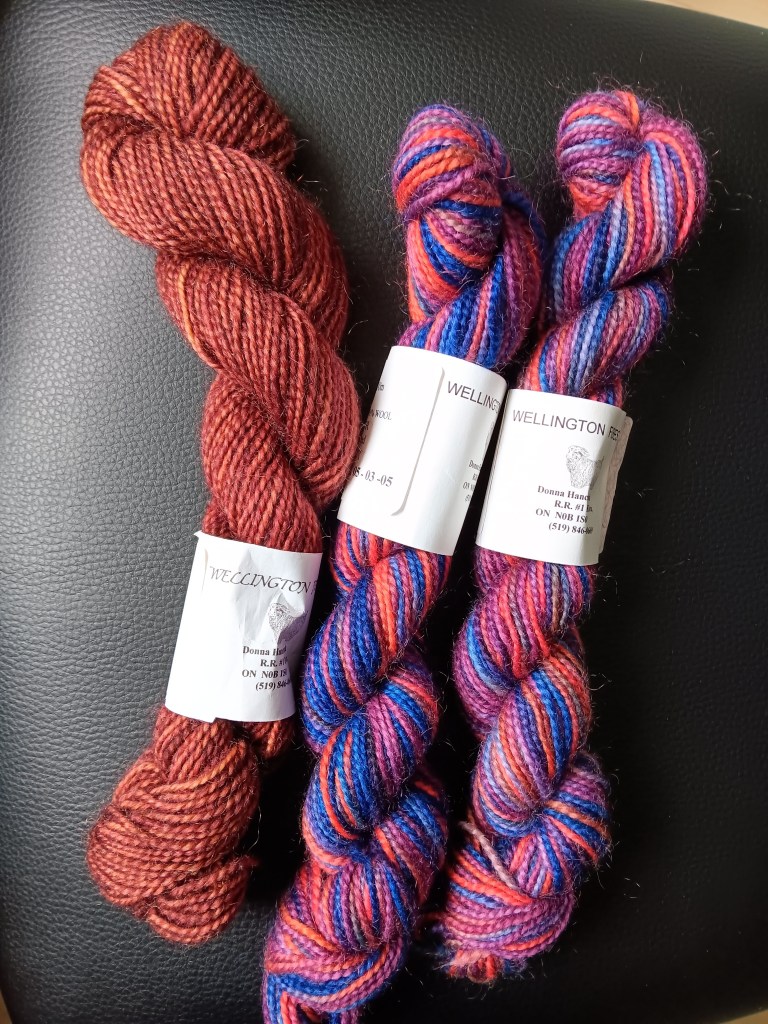
Then I am going to work in stripes of 2 rounds of variegated wool and one round of brown, worked in the helical method.

If you haven’t tried this, it’s a fantastic way to work one round stripes. Stay tuned. A video may be coming your way.

Cheers, Deb

Any Gauge and Gauge-Free patterns by Deb

deb.gemmell on instagram

Short Rows to lower the Front

Short Rows are the best. To drop the front of your neckline you basically work back and forth, working more rows across and Back of Neck and never working across all the Front stitches. Every time you turn from the right side to the wrong side at the end of a short row, you create a gap.

Different kinds of short row systems are all about how to close these gaps.

When you cast on for this neckband you cast on many more stitches on the front. The short rows I use end with a decrease: SSK, K1, Turn OR P2tog, P1, Turn (if you knit cuff down heel flap socks you will recognize this short row system). The decreases take care of all those extra Front stitches.

Now the fun part begins, not that knitting short rows isn’t fun, because it totally is.

To knit the shoulders, simply knit round and round, working an increase before and after each of the shoulder markers. That’s an increase of 4 stitches every round until you reach the desired width. That’s the contiguous way.

Almost to my desired width on this chunky weight one. The Short Rows on the worsted weight version are complete so round and round I go. I’m so excited to see it grow. Cheers, Deb

Any Gauge and Gauge-Free patterns by Deb

deb.gemmell on instagram

6×6 Square Neck Cardigan

I am on to a new idea: a cardigan with a square neck opening. It will be a pseudo crew neck, I guess.

I’m also experimenting with videos. There are three here. Let me know what you think. It’s so much easier for me to talk, rather than write, about a new idea. (You may have to turn the volume up. No idea how all this works yet.)

The Back of Neck is 2″ narrower than the two fronts added together, as they would be if they were buttoned up. It will be interesting to see how the neck fits.

Here is the cast on with green raglan markers in place and two yellow markers to delineate the buttonbands.

Here we go, my first try with the short rows across the back of neck. They seem to be working fine.

I did a video of a really easy way to work short rows in a ribbed neckband.

I’m excited. Are you on the edge of your seat? LOL!!! Cheers, more next time. Deb

Any Gauge and Gauge-Free patterns by Deb

Deb.gemmell on instagram

Settling In

There are parts of sweater knitting that I enjoy over others. Settling in to knit a raglan yoke is one of the most enjoyable parts of the sweater for me. I love keeping track of the increases, seeing it get bigger and bigger, wider and wider, knowing it’s going to be so great.

Both of my Family Crew Neck sweaters are progressing well. The child size 4 is way ahead.

The colouring of the yarn is a great incentive to keep going. This is Maravilla by Katia, a wool & acrylic blend.

My navy version (Shelridge Yarns, W4 worsted, navy) is coming along. The short rows are done here. I was knitting on a train trip to Ottawa. Perfect knitting conditions: travel mug of tea, audio book and ear buds, hours of quiet knitting time.

Now I’m ready to really go for it. I will be introducing a pattern into the front 20 stitches between the ends of the short rows. Fun, fun, fun. Isn’t knitting just the greatest!

Cheers, Deb

Any Gauge and Gauge-Free knitting patterns by Deb

Deb.gemmell on instagram

Geeky Short Row placement

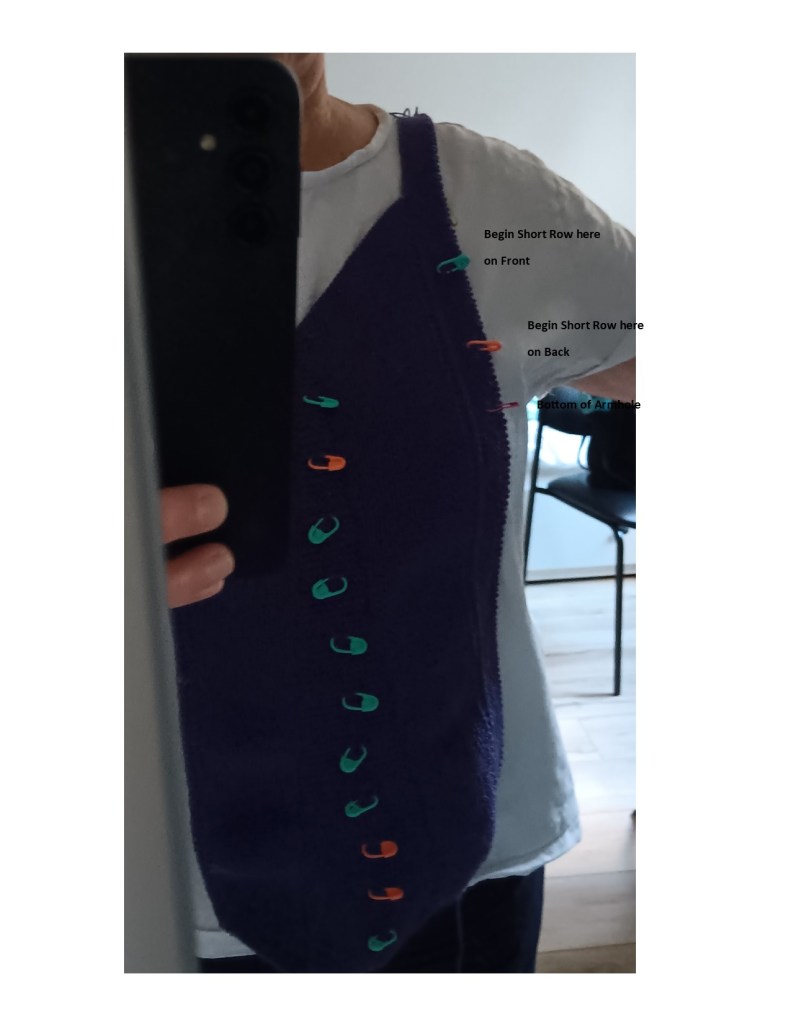
As I have been knitting away on my vest version of the Build A Bigger V cardigan I have been thinking about the armhole. They are rather a big deal when knitting a sleeveless garment, right?

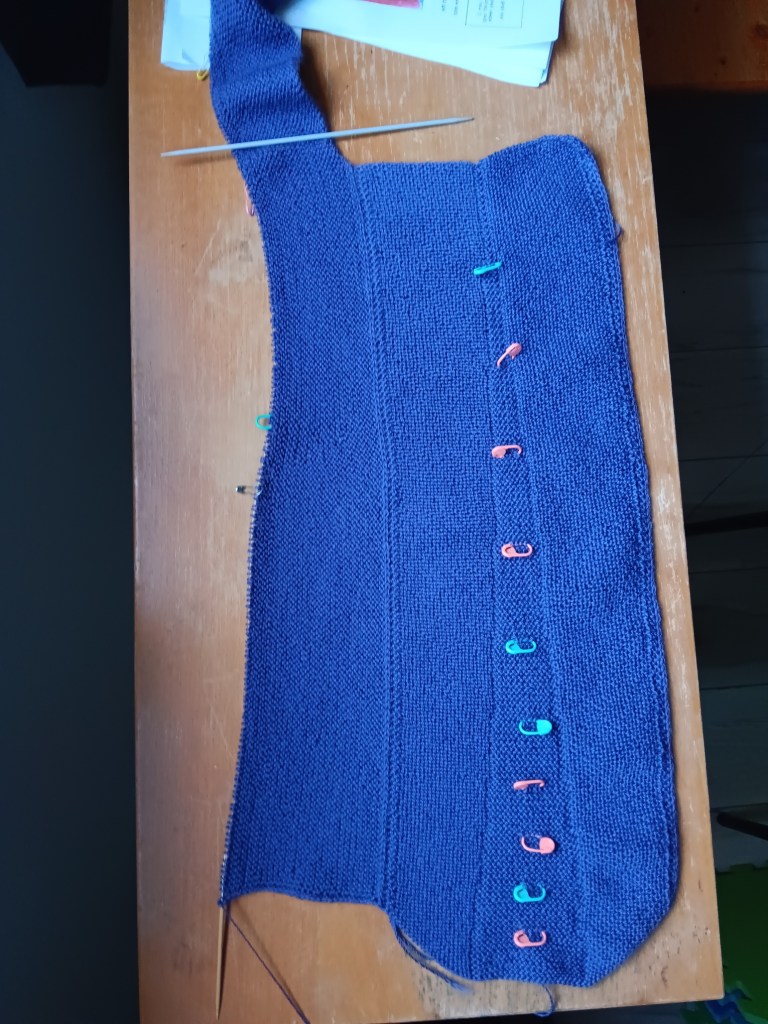
My other concern was getting some extra bust width on the front. Short rows to the rescue. The mods pages for the cardigan has instructions for short rows to make an A-line cardigan. I used the same idea except for where I began my short rows.

I want the extra width to begin high up so I get an outward slant to the line from the shoulder. High on the front (the top pine) and lower on the back (lower pin).

I worked the short rows with 2 ridges in between. I think it worked.

I can almost see it finished now.

Almost!!!

Hope your knitting is going well too, Deb

Any Gauge and Gauge-Free patterns by Deb

Deb.gemmell on instagram

Can’t put it down

Sometimes a project catches you and you just can’t put it down. The V Plus Cardigan has a hold on me. Not just because I need a couple of new cardigans but because I’m back to sweater knitting, my first love. I can’t wait to get this published so you can get started too.

I finished the body of my first prototype. You might catch that the body wool is left over from the Salt & Pepper version of the Family Crew Neck pattern. I added the green stripes in the yoke to make the wool go a little farther since I didn’t have quite enough for a second sweater. (Briggs and Little, Heritage)

I’ve wet blocked the body just to make sure it’s all that it should be. Do you ever block part way through?

Before I embark on the last sprint, the sleeves, I wanted to be sure.

I’m so enamored with this cardigan that I started a second one. (Patons Classic Wool worsted) It’s interfering with the sleeve knitting but it doesn’t take much to do that.

Two, two, two cardigans on the needles. I am welcoming winter. Come and get me, I’ll be ready!

Cheers,

Deb

Any Gauge and Gauge-Free patterns by Deb

Salt and Pepper Crewneck

This Any Gauge Family Crew Neck was a fairly quick knit. Nice big needles and an interesting wool for a plain pullover. Now that I have a basic sweater done I can get down to finishing my pattern. No more procrastinating. I’m taking on the challenge of making this pattern for all sizes. This is new for me and something of a formatting nightmare. How do I put in all the information for all the sizes and not overwhelm the knitter who is only knitting one size? Hmm, lots to learn here.

I used Briggs and Little Heritage, Threaded G+W. I knit it at a slightly looser tension (15 sts = 4″/10cm as opposed to the recommended 17 sts = 4″/10cm) for a nice drape. I’m very happy with it.

One more Family Crew Neck pattern prototype is done. I’m going to deliver it this week and will have some photos next week. Now to cast on the next one.

Right now I’m taking a moment to feel the satisfaction of a sweater finished. Don’t you love that feeling?

Cheers and hope your knitting is going well too. Deb

Any Gauge and Gauge-Free patterns by Deb

Crewneck Pullover short rows

The new pattern I’m working on for a Family Crew Neck Pullover begins by knitting the neckband in the round. This is not the usual way to start a raglan pullover.

Usually you would cast on for the shoulder, back of neck and second shoulder and work back and forth to form the crewneck. You would work your usual raglan increases along with an increase at the beginning and end of the row to form the crewneck angle on the Front. Then cast on some centre front stitches and work your yoke in the round. Pick up the neckband afterwards.

Have you made a pullover that begins like this?

But of course, I am not doing this pullover like that. As my husband would say, “Have you met me?”.

I am starting with the neckband already knit in the round and to form the crewneck front, I’m going to work short rows. Why? Because I love short rows and they work.

Look at that. To me it’s a thing of beauty. I know, it’s a weird designer thing. But I do love looking at this stage in my pullover. The Back is raised. The Front is lowered. And now we’re working in the round for the rest of the yoke.

Now I have a question for you. Here it is with a colour change.

Is the angled edge of the Front with the short rows too messy?

Here’s a close up of both sides. Messy?

I don’t mind it at all but …

Would you like one round of grey knit before starting the short rows? Yes or No?

Thanks. I appreciate your opinion. Cheers, Deb

Family Crew Neck

Any Gauge and Gauge-Free patterns by Deb

Symmetry vs Asymmetry

How attached are you to symmetry? When I try to work asymmetry into my own designs they seem to work hard to revert to something symmetrical. I’m trying to work against this tendency. Sometimes it works.

The other factor in favour of asymmetry is that my mind and maybe yours, is restless and easily distracted. The thought of working too much of the same thing is not appealing right now.

So I’m working on a scarf or shawl in 3 sections where I, and eventually you, will be able to change it up.

It starts with triangles that begin small and get larger and larger, worked join-as-you-go to your desired depth of scarf, in this case about 8″/20cm deep.20200517_091914

Then there is a straight centre section worked on the bias. This is a simple 2 row repeat so you will be able to play. I tried 3 different stitch patterns: stripes, eyelets and the daisy stitch. Do you have some other favourite stitch patterns that could work?

I didn’t do this for long as you can see. I made the first section very long. I was afraid if I kept going I would have to wind this scarf around my neck several times as if I was a giraffe. But hey, if that’s a good look for you, go for it. I took the scissors to my prototype, snip, snip, first two triangles are gone and now it’s a much better shape for me.

Then for the final section I worked a scalloped edge which can go on forever, OK not forever but certainly until you run out of yarn, stitches or patience.20200517_092104

 After surgery, my scarf is 66″/168cm long and weighs 125g.20200517_110131

What do you think? Would you like the option to make both ends match? Where do you stand on the symmetry/asymmetry question?

Deb

Any Gauge and Gauge-Free patterns by Deb

Cabin Fever No-Sewpatterns